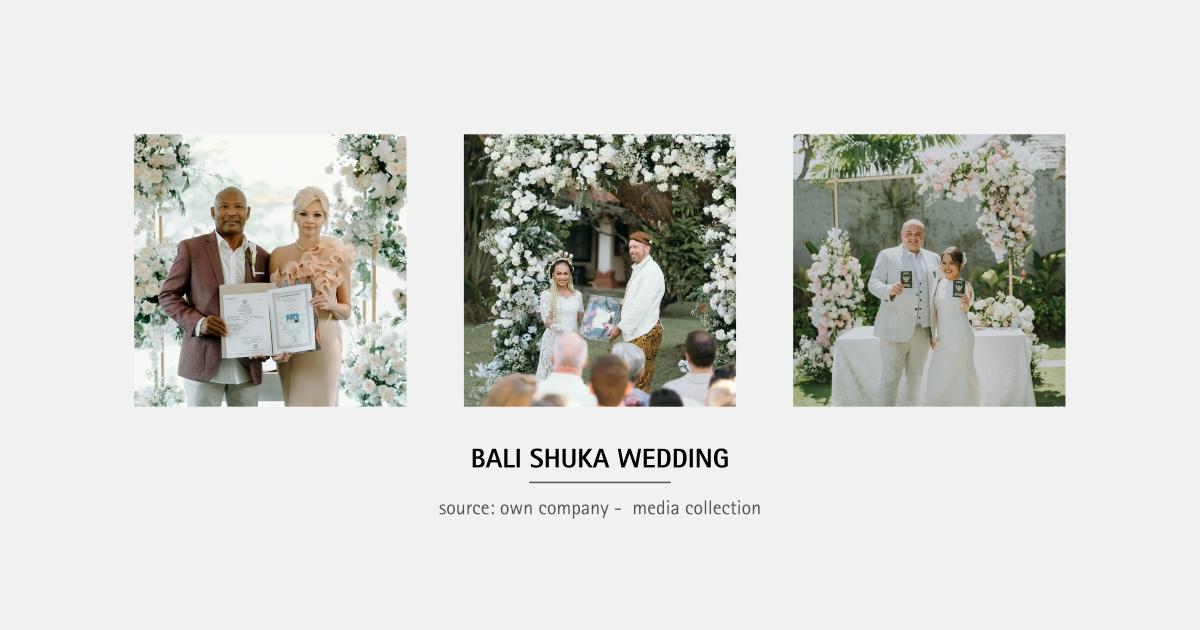
How to Marry Your International Partner in Bali?
Planning a dream wedding in Bali with your international partner? Obsessed. Bali is hands-down the most iconic place to say "I do," but let’s be real—before you get to the Pinterest-worthy decor and sunset toasts, the legal side of a mixed marriage can feel like a total maze.
Don’t panic! We’ve distilled the bureaucracy into this sleek, "no-fluff" guide to getting legally hitched in Bali. Let’s get you from "Processing" to "Just Married."
1. The "Golden Ticket": The CNI
- First things first: your foreign partner needs a CNI (Certificate of No Impediment). This is essentially a formal "hall pass" from their embassy or consulate in Indonesia stating they are legally free to marry (meaning they’re currently single, divorced, or widowed).
- Tips: Every country has its own vibe and timeline for issuing a CNI. Tell your partner to hit up their embassy early to avoid any "last-minute" drama.
2. The "Paperwork Hustle": Essential Documents
To make it official in the eyes of the Indonesian government, you’ll need to gather your "document squad." Accuracy is key here—no typos allowed!
For the Indonesian Citizen (WNI):
- ID Card (KTP), Birth Certificate, and Family Card (KK).
- Formal letters from your local hood (N1, N2, N3, and N4 forms from the RT/RW and Kelurahan).
- Passport-sized photos of the couple together (usually with a specific red or blue background—check with your local office!).
For the Foreigner (WNA):
- A copy of a valid Passport and Visa.
- The original CNI from the embassy.
- Birth Certificate (must be translated into Indonesian by a sworn translator).
- Divorce Decree or Death Certificate (if applicable).
- Certificate of Religion Change (if marrying under Islamic law).
3. The "God First" Rule (Religious Ceremony)
In Indonesia, a marriage isn't legally recognised by the state until it’s been blessed religiously. Both partners must profess the same religion.
- Muslim Weddings: Conducted and registered directly at the KUA (Office of Religious Affairs). You get your marriage book (Buku Nikah) immediately.
- Non-Muslim Weddings: You’ll have a religious ceremony (Church, Vihara, etc.) to get a certificate from your religious leader. This is step one of a two-step process.
4. Make it Official: Civil Registry
For non-Muslim couples, your religious ceremony is just half the battle. You have a 60-day window to register that religious certificate with the Disdukcapil (Civil Registry Office) in Bali. Once that’s done, you’ll receive your official Marriage Certificate. Without this, you’re not "legally" married in the eyes of the state!
5. The Power Move: The Prenup (Perjanjian Pranikah)
If you’re a mixed couple, a Prenuptial Agreement isn't just "celebrity behaviour"—it’s a survival tactic.
Why? Under Indonesian law, WNIs lose their right to own "Hak Milik" (Freehold) property if they marry a foreigner without a Prenup. Why? Because the law views assets as "joint property." Since foreigners can't own land, the WNI also loses that right.
The Fix: Get a Notary to draft a separation of assets before you sign the marriage book. Protect your future, folks!
Conclusion
Yes, marrying a foreigner in Bali requires some serious "adulting" and a bit of a paperwork grind. But once the bureaucracy is out of the way, you’re left with a lifetime of memories in paradise. Just take it step-by-step, and you’ll be golden.
Manifest Your Dream Wedding (Without the Headache!)
Feeling overwhelmed by the CNI talk and the thought of chasing down government offices? We get it. Bali Shuka Wedding is here to be your ultimate wedding wingman. We specialise in mixed marriages (WNI x WNA), handling everything from the "headache-inducing" legal documents and Civil Registry to sourcing the most aesthetic venues on the island.
Skip the stress and keep your "Bridezilla" moments to a minimum. Let us handle the sat-set (fast-paced) logistics while you focus on looking fabulous.
Ready to start? Consult with Bali Shuka Wedding today!